
May 26 2026, 5:16 pm
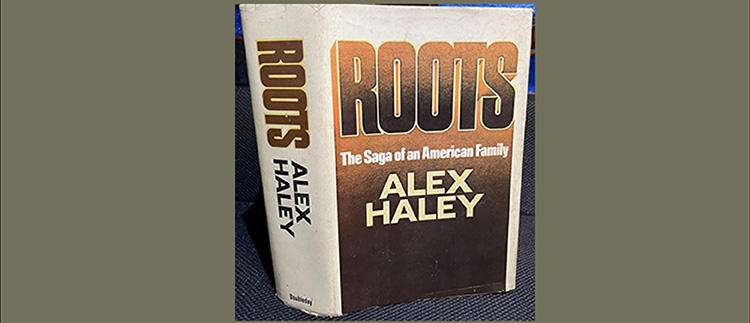
KNOXVILLE - Today, the Knox County Board of Education ruled to return Roots to the school library shelves immediately. Strong opposition to the book's removal from Knoxville school libraries has been overwhelming.
In the meantime, Alex Haley's family, Sen. Lamar Alexander, and "Roots" stars Levar Burton and Leslie Uggams strongly reacted to the school district's ban of Haley’s Pulitzer Prize-Winning Book in His Home State of Tennessee during the “Roots” 50th Anniversary Year.
Tennessee's redistricting controversy has been joined by the state’s Knox County School District banning from its libraries the Pulitzer-Prize-winning historical novel, Roots, by Henning, TN-raised Alex Haley, under Tennessee’s embattled Age-Appropriate Materials Act (AAMA) of 2022 (as updated and enforced). Haley’s famed farm in Clinton, TN (now owned by revered Children’s Defense Fund), is not only ironically adjacent to Knox County, but since 1998 the county seat of Knoxville touts the Alex Haley Heritage Square with a statue of Haley reading a book. Other local ironies include: Haley has papers at the University of Tennessee located in Knoxville, and he was posthumously recognized in 2024 as a “Hero of Southern Appalachia” by the Museum of Appalachia, in a presentation that included former U.S. Senator Lamar Alexander (R-TN). In fact, Sen. Alexander—also a Haley friend—recently released both a memoir, “The Education of a Senator: From JFK to Trump” and a statement on the ban. He declared, “This is a mistake... It is true that Roots has a few violent scenes, but the [Middle] passage of Africans to America was violent.”
It being a mistake and shortsighted is amplified by the impact of Roots and Haley on the world (Roots was printed in over 35 languages), and his influence across the state—such as the Alex Haley Musuem & Interpretive Center that includes not only his resting place, but the Henning house he first learned his family’s history, while his Roots Pulitzer Prize Certificate is at the Tennessee State Museum in Nashville. However, the most glaring paradox is that a bill by GOP State Rep. Gino Bulso designated Roots as one of the first ten “official state books” for its “historic, social, and cultural importance to the Volunteer State”. It was passed in 2024 by Tennessee’s General Assembly—the same body that approved the AAMA two years earlier.
In light of Haley’s Tennessee bona fides, banning Roots amidst its and Haley’s historic significance—including the Emmy-winning 1977 same-titled miniseries—has prompted not only international attention and national backlash, but the shock of Haley’s immediate family and relatives, who—since January 2026—are celebrating the 50th Anniversary year of Roots (Doubleday published it 8/17/76), through programs across the country with various entities, culminating this Fall. Reacting to the ban’s 50th Anniversary pall is Haley’s grandson, Willam “Bill” Haley, Jr., stating, “The contradiction and censorship is not only clear from the noted accolades, but the ban apparently flagged Kizzy’s rape by her enslaver—a common male enslaver atrocity. As Caroline Randall Williams reminded us around Confederate Monument debates, the evidence is in the diverse complexions, features, eye colors and hair textures among non-biracial African Americans. And the 1977 miniseries—watched by over a record-holding 130 million and assigned viewing by many schools since the book’s recommended for ages 13/14 and over—included the assault.” Frustrated that’s what prompted the ban is Deadpool franchise star, Leslie Uggams, who was Emmy-nominated for her role as “Kizzy”, (and joining Bill on a "Roots" 50th Anniversary panel presented by NY Congressman Gregory Meeks for September’s CBCF-ALC). She states,“ [They] think an enslaved girl’s rape by her enslaver is‘inappropriate’for students to read? No.That rape happens in the first place is what’s ‘inappropriate’.” An assault that bore Bill’s 4th great-grandfather, “Chicken” George Lea.
Sharing the ire of Ms. Uggams is "Roots" lead Emmy-nominated star, LeVar Burton, who portrayed “Kunta Kinte”—Alex Haley’s 2nd great-grandfather. Burton’s also the beloved Emmy-winning host of perennial award-winner, Reading Rainbow (PBS). Therefore, it’s not a surprise that he didn’t mince words: “The banning of Alex Haley’s Roots from school libraries in Knox County, Tennessee, made me laugh out loud. The conversation must’ve gone—‘Just how disrespectful to his memory is it possible to be? How low are we willing to debase ourselves?’... Attempting to erase Alex Haley, one of America’s most lauded authors, is a textbook strategy used by those who concede to being bereft of all human decency.”
Residing in California, Bill also questions the intent, “I’m trying to understand how in 2024 my grandfather was named a Hero of Southern Appalachia, where I accepted the award on his behalf, and Roots was deemed an official state book, but two years later it’s banned?” Bill further expresses concern that Tennessee and other Southern states have had an ongoing effort to reverse/erase things historically tied to African-Americans, “How do you ban a book by an author, whose local statue literally has him holding a book?” Sharing Bill’s concern is Knoxville area State Rep. Sam McKenzie, who has authored 2025’s Freedom to Read Act in an attempt to counter AAMA’s censorship, saying, “Roots continues to inspire and unite millions of Americans, the reason I supported it as an official state book, and filed the Freedom to Read Act to keep books like Roots available.”
Alex Haley’s nephew, Chris Haley, is also alarmed by the ban’s dangerous precedent, and as Maryland’s Director of Research, Education, and Outreach and the Study of the Legacy of Slavery, he notes, “Those who don’t learn from history are doomed to repeat it—and Jim Crow’s rushing back.” L.A. Managing Assistant City Attorney and Alex Haley’s niece, Anne Haley, says, “Banning Roots is a disservice to the very state that birthed it. History doesn’t change, just because it’s denied.” Bill’s daughter, a recent UC Davis graduate, Nala Haley—among Kunta Kinteh’s 10th generation—and Alex Haley’s great-granddaughter, sagely cautions, "When we choose to omit stories of our past, we rob people of the framework necessary to build a better future."
To continue Alex Haley’s legacy of that framework, Bill co-founded nonprofit The Inherited Roots Project with Malick Manga (also on the CBCF-ALC’s Roots 50th Anniversary panel with Bill and Ms. Uggams). He’s also the son of Ebou Manga, whom Alex Haley credited—along with Ebou’s family—with helping him to uncover his Gambian/Kunta Kinteh roots, from when he met Ebou in 1966 as a Gambian exchange student at revered Hamilton College. Ebou’s connection to Malick’s “Uncle Alex”, who led Haley on his first trip to The Gambia, was more than a lifelong friendship; it was a brotherhood. Knowing his late father’s role with Roots, Malick reflects on how his dad would react if he were alive: “My dad also knew Sen. Alexander, and would’ve supported his statement, including about the Middle Passage’s violence. However, the ban would shock my dad, and as a naturalized citizen, he would be sad about where we are as a country.” Chris Haley notes something else that’s sad with respect to the ban, “It is...truly sad this [ban] hides a deeper goal—to erase any mention of marginalized people.”
And it is the aspect of “deeper goals” that has many on edge around the country, because it seems to be a concerted endeavor on all fronts to attack African Americans: redistricting that dilutes representation in states where there’s only a few or just one majority Black districts; cuts to DEI programs (regardless of success); hyper-compliance with draconian anti-DEI laws (e.g., Florida’s “Can’t Say Black” debacle, etc.); and unfortunately other examples, especially in the South.
Ms. Uggams—who’d learned she was a Jim Crow target as a young singer in the ‘60s—is blunt, “Ever since [the Confederacy] lost the Civil War, they’ve been working nonstop to erase our history, silence our voices, and take away our power. But...they’ve forgotten that WE are the ones who write our history, and our future.... We write it every time we march...vote or run for office...overcome ridiculous obstacles and succeed beyond mediocrity. We also write it every time we pass down our stories to the next generation. They cannot silence us.” Anne Haley agrees. “Roots is the manifestation of generations of oral history and storytelling, and we will NOT stop telling our story, just as our ancestors did not.”
Aware that the current times are rife with adversity, State Rep. McKenzie is still optimistic, “We have to band together and tell [those] in power in Knox County, the state of Tennessee, and in Washington D.C. to stop trying to erase history, because we aren't going back." Supporting the sentiment of banding together is the President of the Museum of Appalachia, Elaine Irwin Meyer, who is white. Her father founded the Museum and sold Haley his farm. She and her father became close with Haley until his passing. Ms. Meyer stands with Roots being on shelves in high school libraries, especially for its history. She states plainly, “Roots...is a difficult book to read, but one we all need to read...we’d learn invaluable lessons about kindness and compassion.”
Sen. Alexander also spoke to the value of learning the good, the bad, and the ugly, stating, “We wanted our children to know the truth of our country’s history—all of it, not some of it, overcoming the bad as well as celebrating the good. We wanted them to learn about the Confederate generals as well as the Union soldiers, the lack of civil rights, and the eventual winning of civil rights. We don’t believe in canceling part of our history. We wanted our children to understand that the American Republic has never been a perfect union, but that its greatness is that it has always struggled to reach noble goals. As the former NAACP chairman Ben Hooks told his students at the University of Memphis, ‘We’ve come a long way, but we have a ways to go’.”
Bill Haley concurs, “We have come a long way. My grandfather gained worldwide acclaim despite being the descendant of an enslaved Kizzy, and regrettably, her white enslaver—his 3rd great-grandfather, and my 5th great-grandfather.” Malick Manga added, “And that this ban happened, indicates we absolutely have a long way to go.” In the meantime, they both agree that Roots should remain accessible in the school district’s libraries for the recommended ages 13/14 & over. Unfortunately, the AAMA allows for just one section of a book to ban library access for all students K-12, versus reviewing it within the context of the entire book and student ages, as previous reviews were conducted. Though the ban is casting a shadow over the 50th Anniversary of Roots, Bill is resolute, “They’re escalating things, the ban went from 48 books to over 100 on a list full of standard and classic library titles. Which is why the Haley family and The Inherited Roots Project not only call for reconsideration of that list, but of that [AAMA] law.”
