
Albino American Alligator Finds Home at Zoo Knoxville
September 4, 2026, 2:10 p.m.
 |
|---|
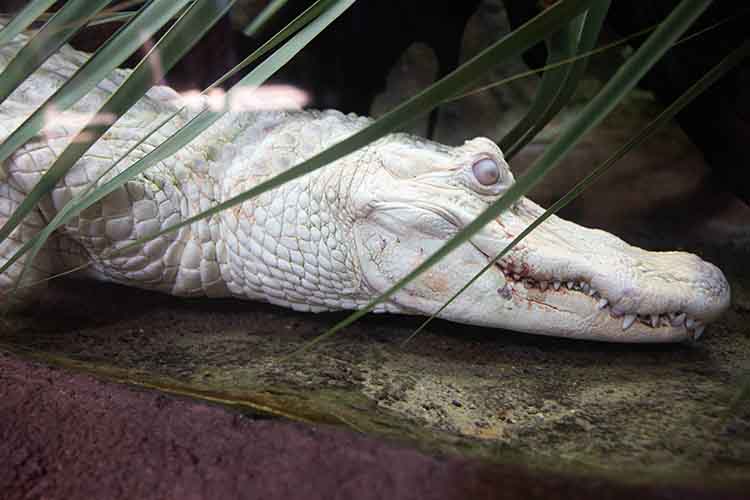
| Elsa the Albino American Alligator. Image by Zoo Knoxville |
KNOXVILLE - Zoo Knoxville is excited to welcome Elsa, an Albino American Alligator. Elsa comes from an Association of Zoos and Aquariums (AZA) accredited institution in Florida and will call Zoo Knoxville home temporarily.
Elsa’s pale skin and pink-tinted eyes are the result of albinism, a genetic condition that prevents her body from producing normal amounts of melanin. Melanin is the pigment responsible for coloration in the skin, scales and eyes, and it also provides protection from the sun. Because Elsa produces very little melanin, she can sunburn easily.
Her appearance also illustrates why an Albino American Alligator would face significant challenges surviving in the wild. American alligators typically rely on their dark coloration to blend into the wetlands, swamps, marshes, rivers and lakes they inhabit. Elsa's coloration makes that camouflage much more difficult, leaving an albino alligator more visible in its environment.
“Elsa’s story is about more than what makes her look different. Her albinism helps us talk about the challenges she would face in the wild and the challenges facing wildlife everywhere,” said Michael Ogle, Curator of Herpetology and Birds at Zoo Knoxville. “By connecting people with animals like Elsa, we can turn curiosity into a greater investment in protecting wildlife and wild places.”
Elsa is the newest resident of the The Clayton Family Amphibian and Reptile Conservation Campus (ARC), where guests can see some of the world’s most fascinating reptiles and amphibians and learn more about the role they play in healthy ecosystems.
Her arrival also provides an opportunity to share the larger conservation story of the American alligator. Once hunted to near extinction, American alligators received federal protection in 1967, helping wild populations recover. Today their populations are stable, but their habitats continue to face pressure from habitat loss, degradation and human-wildlife conflict.
American alligators are also a keystone species, playing an important role in maintaining healthy ecosystems by shaping their environment and helping control prey populations.
Guests can now see Elsa at the ARC during her time at Zoo Knoxville.
To learn more about Zoo Knoxville’s conservation mission, visit zooknoxville.org.
Source: Zoo Knoxville
